
Guide for applying the Crazy 8 Technique for Wireframing
Creating User-Centric digital products: Exploring the Power of the Crazy 8 Technique for Wireframing.
 By Luis Alfredo — Founder, Menta Experts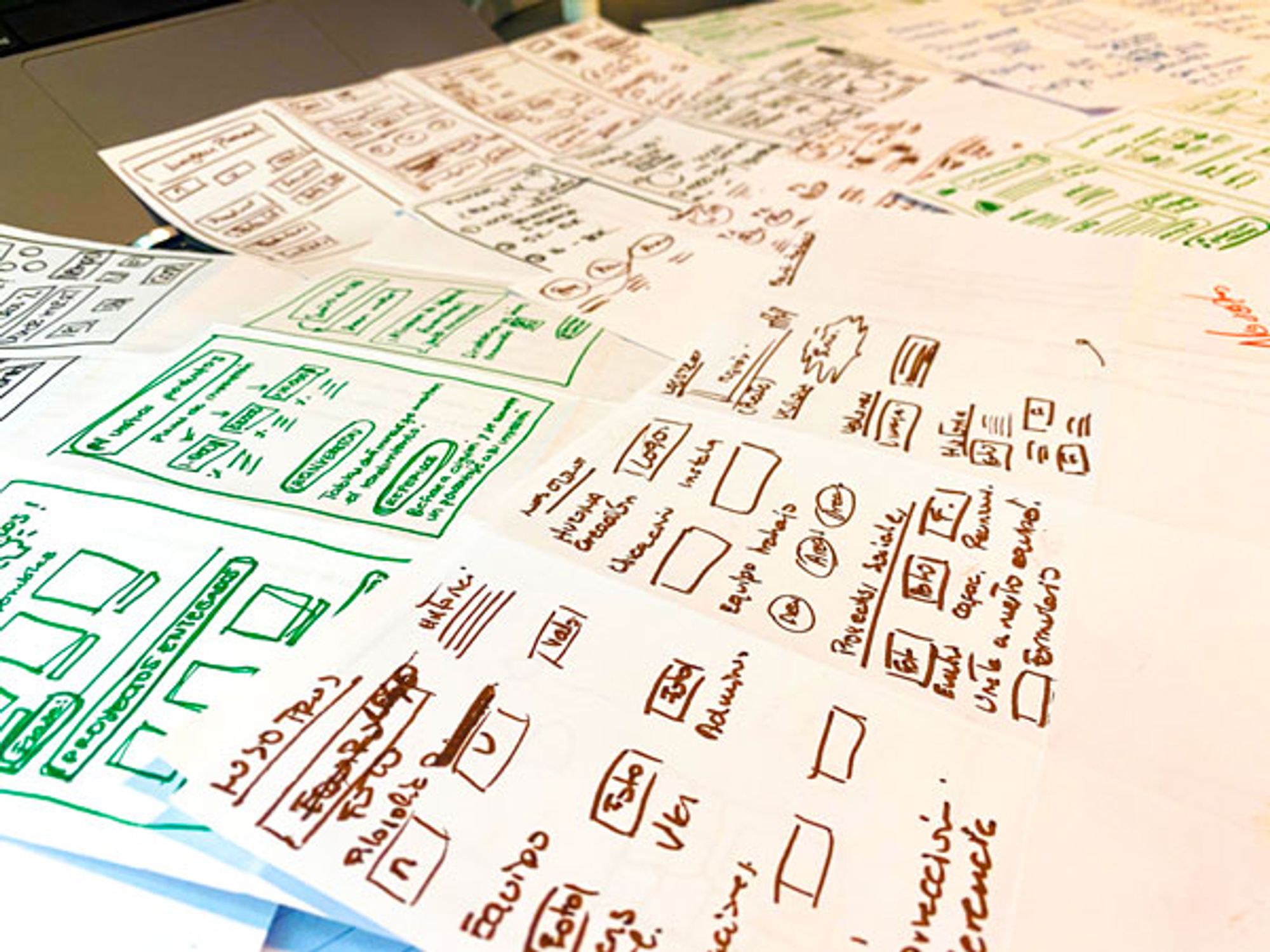
The Crazy 8 technique is highly useful when it comes to problem-solving situations that require creativity and generating a multitude of ideas. Specifically within the field of UX, this technique greatly aids in the ideation process for wireframes. The technique gets its name from dividing an A4 sheet into eight quadrants, where different ideas are sketched in each quadrant (or as the user progresses) within a total of eight minutes.
It is ideal for initiating a new project involving the creation of a website, web platform, or app. Clients, development team members, design team members, and even potential end-users can be involved. This way, the person responsible for executing the web project (depending on the team, it could be a Project Manager, UX Manager, or web designer) can gather valuable input for generating wireframes. The idea behind this methodology is to:
- Generate a large quantity of ideas.
- Obtain opinions from all participants without any authority bias.
- Foster creativity and a higher quantity of ideas by imposing time constraints.
- Avoid judging others' ideas; every idea is valid.
Objective of Crazy 8
To gather ideas for the overall layout of a web page in order to create the corresponding wireframes.
Before Getting Started
- Clearly define the pages for which the workshop will be conducted. Not all pages have the same level of complexity; some pages, such as a contact or blog page, generally have a simpler and more established structure that maybe Crazy 8 is not suitable. For other pages, especially the HOME page, which tends to be comprehensive, this methodology proves highly useful.
- For in-person workshops: As the workshop facilitator, make sure to bring the necessary materials, including A4 bond paper (preferably recycled) and medium-tip markers (avoid using ballpoint pens as their tips are too thin, which may lead to focusing on drawing details rather than the overall layout). Confirm the number of attendees with the client in advance; ideally, have between 3 to 5 participants, with a maximum of 7 people.
- For online workshops: Have a collaborative work tool ready, such as Miro or Figma Jam. However, keep in mind that participants who are not familiar with the platform might face difficulties, and time can be wasted on configuration. Therefore, it is also recommended to inform participants in advance about the upcoming workshop and ask them to have a few sheets of A4 paper and markers ready. The moderator guides the workshop and, at the end, requests each participant to take a photo of their layout and send it privately so that it can be projected one by one.
Methodology
- Clearly explain the workshop's objective to the participants.
- Instruct each participant to fold an A4 sheet three times to create eight quadrants.
- Indicate which page will be sketched (e.g., Home). Start the timer for 8 minutes, and participants should begin filling each quadrant with a possible layout idea for the indicated page.
- Start sketching (without concerning themselves with design or aesthetics) the general layout and content to be included on the page. The eight quadrants are meant to have eight different ideas for the same page or to continue developing ideas.
- At the end of the 8 minutes, the moderator instructs participants to stop, and one by one, they explain their idea within a 2-minute time frame. It is advisable to leave participants with higher authority within the company until the end to avoid creating an authority bias among others.
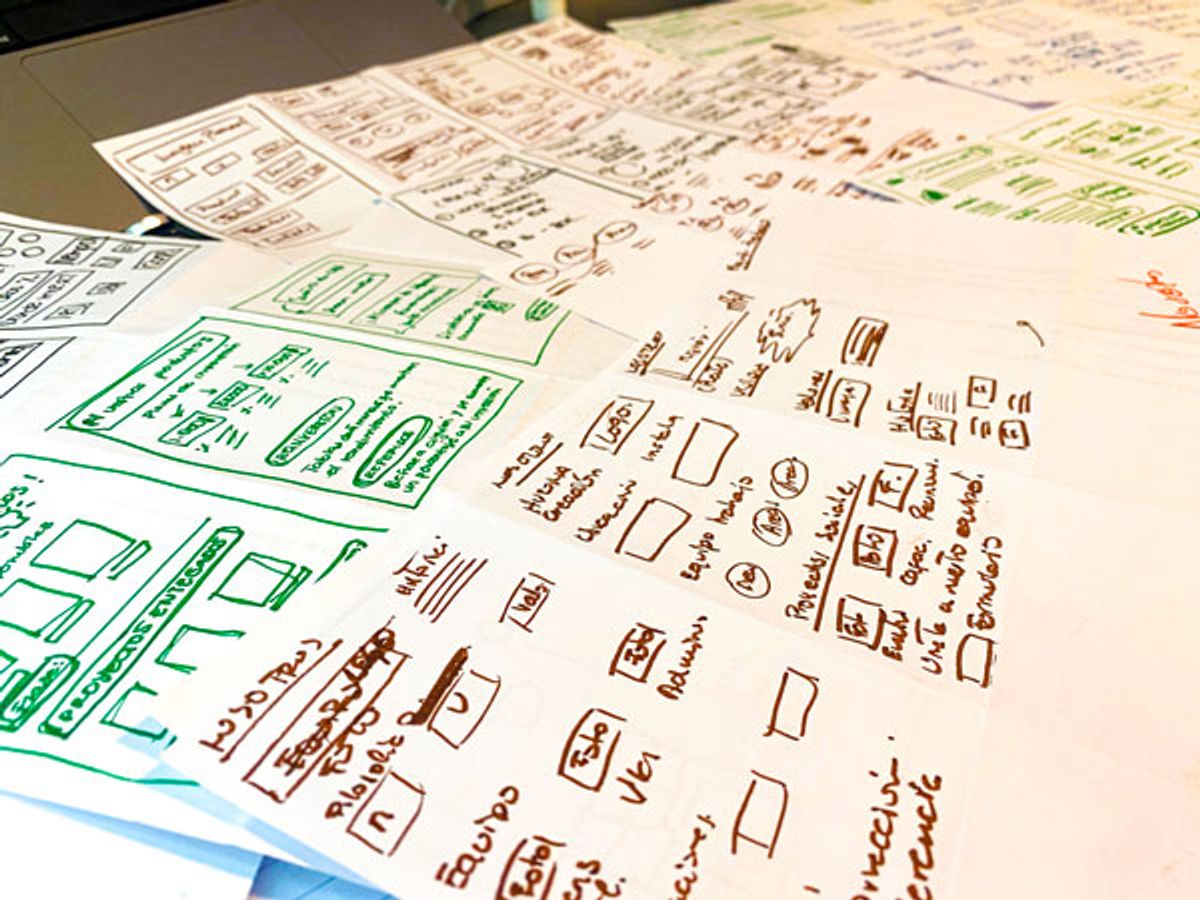
Wireframes obtained in Crazy 8 Workshop
Conclusions
The Crazy 8 technique for wireframing provides a structured and efficient approach to generate diverse design ideas in a short period. By following the step-by-step guide outlined in this article, organizations can foster creativity and collaboration, resulting in exceptional user experiences.


