LBi Real Estate Investment Platform
A real estate investment platform with a dual-collection CMS for projects and individual units, built for Ecuador's first shared real estate investment company.
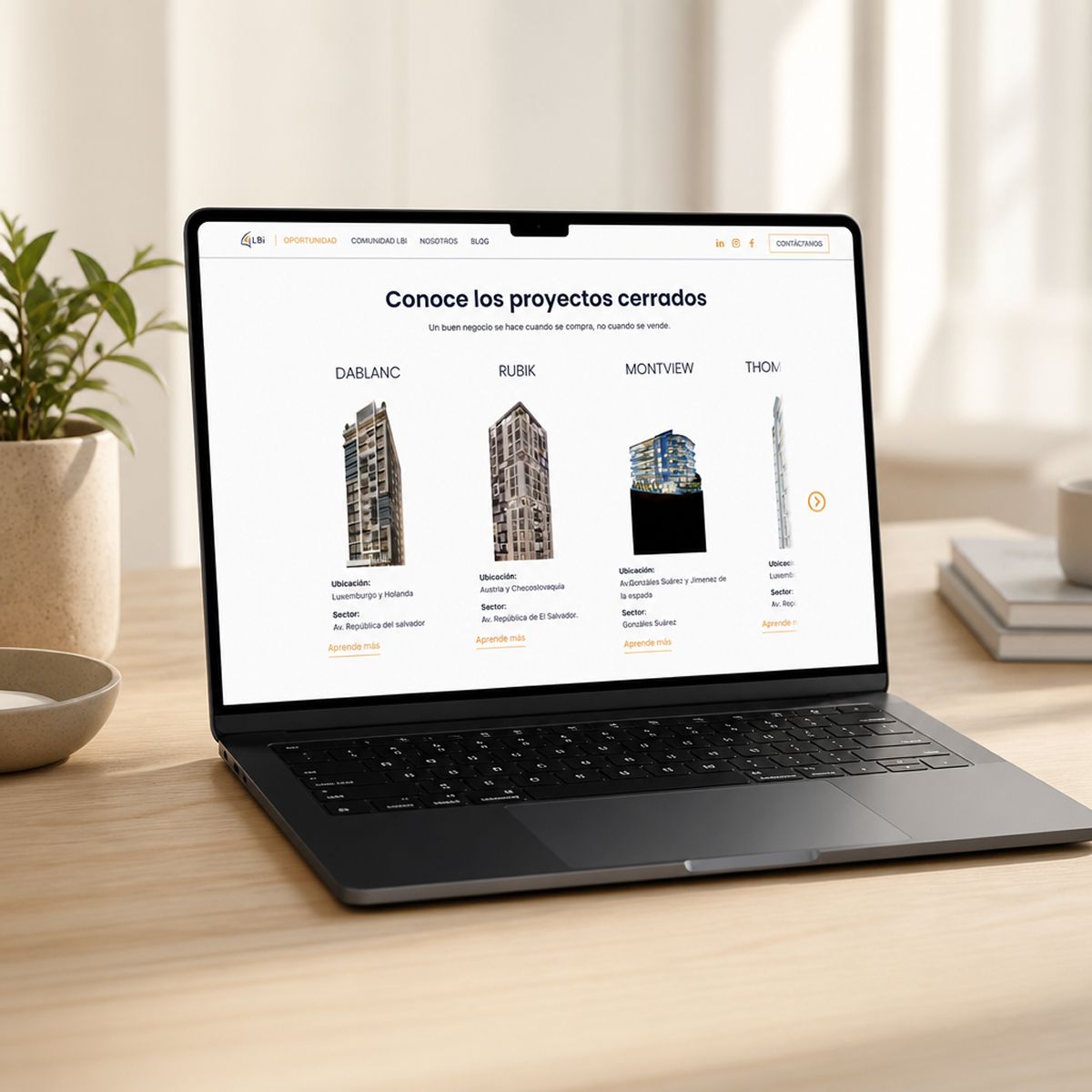

LBi is the first company in Ecuador to offer shared real estate investments, allowing individual investors to participate in real estate opportunities that would traditionally require significantly more capital. The company introduces a new investment category to the Ecuadorian market, which means every prospective investor evaluating LBi is doing so for the first time, without a familiar reference point.
When LBi engaged Menta, they needed a website that would carry the weight of introducing a new investment model to a cautious audience. The site had to do three things at once: present each available project with the depth investors expected, organize available units within each project at a granularity that supports decision-making, and project the level of institutional trust required to take a first investment from interested visitor to committed investor.
Menta delivered a full design and Webflow build with a two-collection CMS architecture for projects and units connected through multi-reference, an availability tracking system that updates in real time, and a content structure that surfaces both the team and the investment opportunity transparently. The platform gives LBi's team direct control over project listings and unit status, while presenting prospective investors with the clarity they need to evaluate each opportunity.
Real estate investment listings have a hierarchical structure: each investment project contains multiple individual units that can be purchased separately. Forcing this into a single CMS collection would have flattened the hierarchy and made unit-level management cumbersome, while building two completely independent collections would have broken the relationship between units and their parent projects.
LBi introduces shared real estate investments to a market unfamiliar with the model. Prospective investors arrive cautious, comparing LBi against more conventional options like direct property purchase or bank investments. The site had to do more than present opportunities. It had to project the institutional credibility required to make a first investment decision.
LBi's project pipeline moves continuously: new opportunities arrive, units sell, and existing projects close out. The internal team needed full autonomy to publish a new investment, update unit status, or close a completed project without depending on a developer for each change.
Two CMS collections were built and connected through multi-reference: a Projects collection holding the investment opportunity at the portfolio level, and a Units collection holding each individual purchasable item linked back to its parent project. A switch-based availability system at both levels allows the LBi team to mark single units as sold or reserved, with the parent project's availability reflecting the rollup automatically.
The visual direction was built around clarity, restraint, and the conventions investors recognize from established financial platforms. A team section with individual member profiles makes the people behind LBi visible and accountable, project pages present financial information transparently, and the visual language avoids the speculative aesthetics of early-stage fintech. The result is a site that signals seriousness without sacrificing modern design quality.
Both Projects and Units collections were structured with every customer-facing field exposed to the CMS, including photography, financial details, descriptions, location data, and availability status. The LBi team can publish a new investment, edit project terms, or update unit availability directly from Webflow's editor, with the public-facing pages updating in seconds. No development support is required for routine operations.